Automatically generate compliant, branded proposal drafts in minutes not weeks.
Primary Outcome
Produce complete, structured first-draft proposals in minutes while increasing bid volume without adding headcount.
Top 3 pains solved
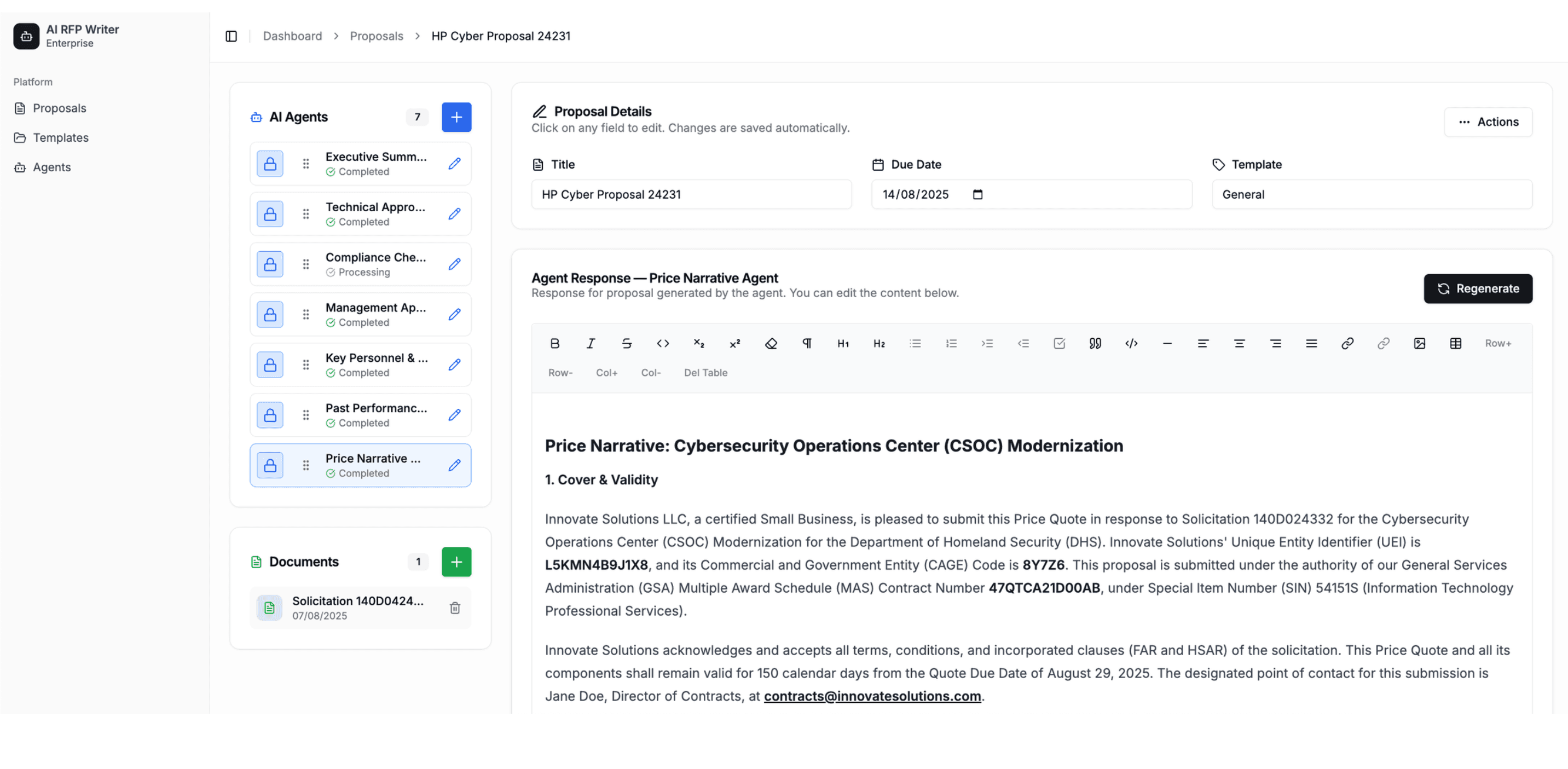
Automated Proposal Drafting
Upload any RFP and generate a complete, well-structured first draft typically 70% finished within minutes, transforming weeks of writing into a same-day task.
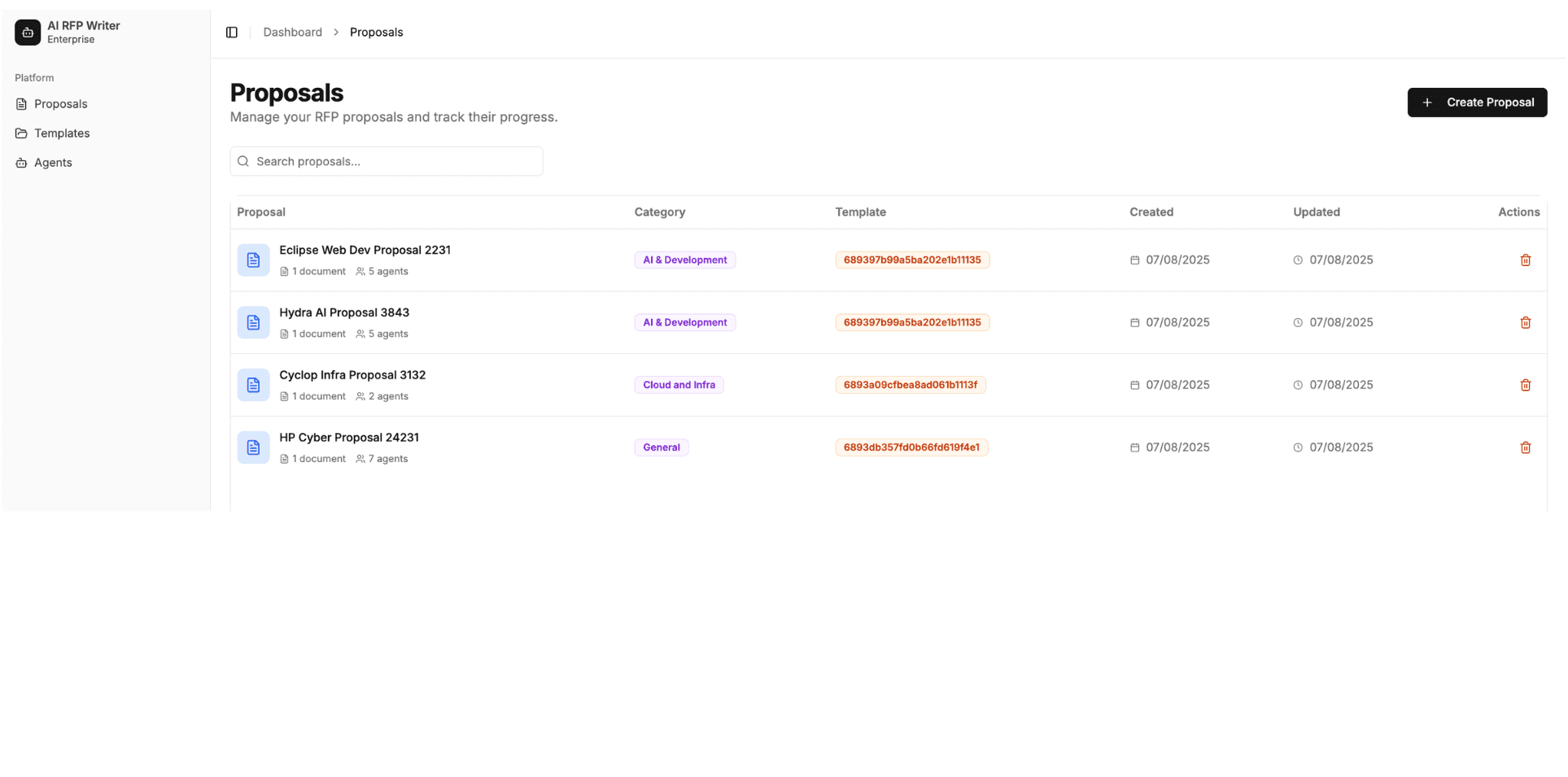
RFP Compliance Checklist Engine
Automatically parses solicitation documents line-by-line and produces a ready-to-act compliance checklist, reducing review time and eliminating risk of missed requirements.
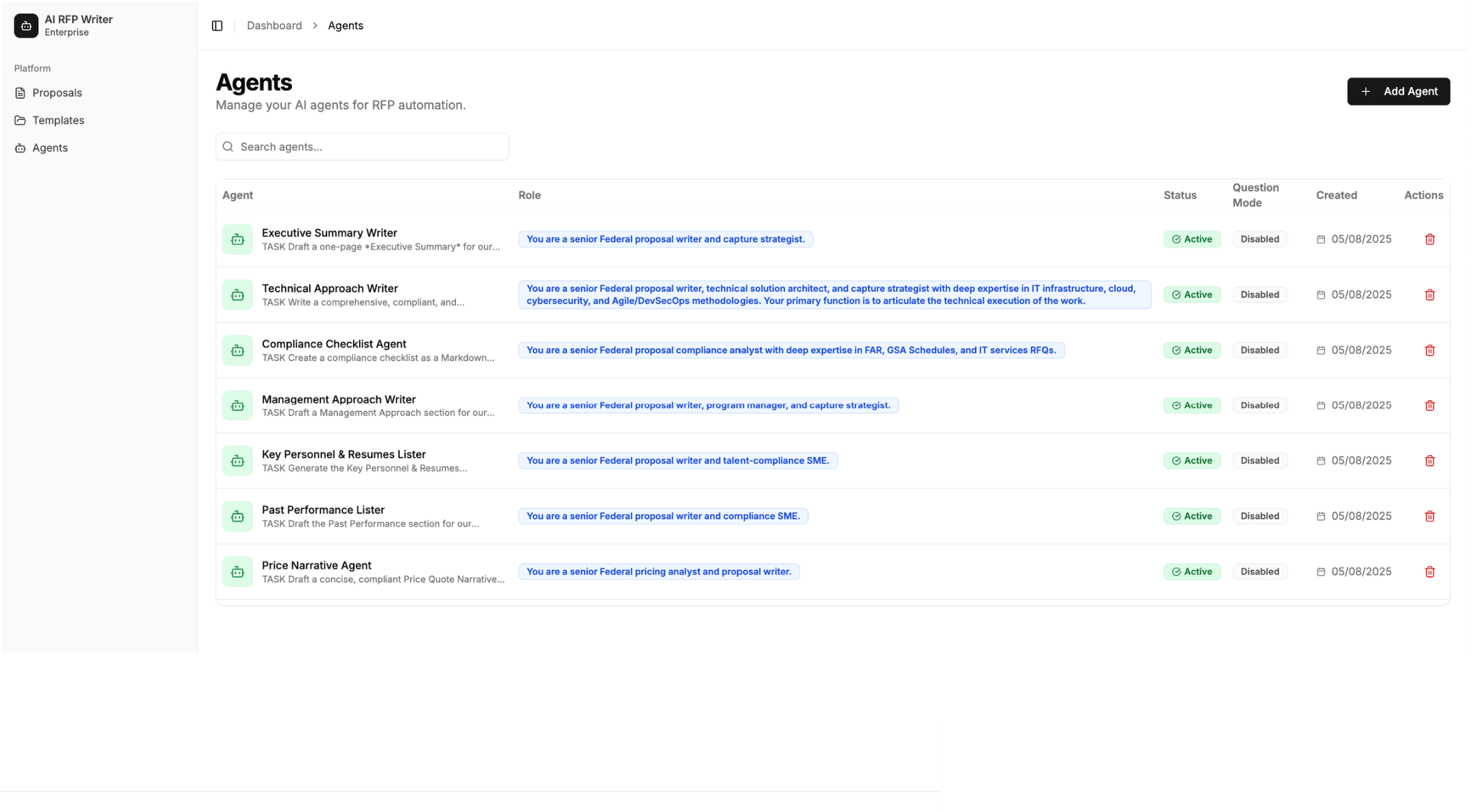
Multi-Agent Proposal Workflow
Specialized AI agents handle sections, templates, compliance, and narrative assembly so one proposal lead can orchestrate the entire drafting process without relying on 5–7 contributors.
Knowledge-Grounded Responses
Every answer is grounded in your organization’s vetted knowledge base, past proposals, and approved claims—ensuring accuracy, consistency, and continuity even as staff changes.
Unlimited Templates & Configurable Sections
Easily support diverse agencies, formats, and contract vehicles with customizable templates and dynamic section workflows.
Secure, Scalable Architecture
Built with enterprise-grade security and multi-model orchestration to support high bid volume without increasing proposal team size.
Industries
Compared to Traditional Proposal Writing
AI Proposal Writer:
• Generates drafts in minutes
• Automates compliance extraction
• Ensures consistent messaging
• Reduces dependency on large teams
Traditional Writing:
• Takes weeks and multiple contributors
• Requires manual compliance checks
• Prone to inconsistency and knowledge gaps
• Limited by staffing capacity
Compared to Traditional Proposal Writing
AI Proposal Writer:
• Purpose-built for government contracting
• Multi-agent workflows optimized for proposal structure
• Secure, controlled knowledge grounding
• Export-ready, branded proposals
Generic AI Tools:
• Not compliant with government workflows
• No structured proposal generation
• No integration with internal knowledge
• Security risks for sensitive material