Our Product

Our Product

Our Product

AI-Powered Clinical Training Platform

AI-Powered Clinical Training Platform

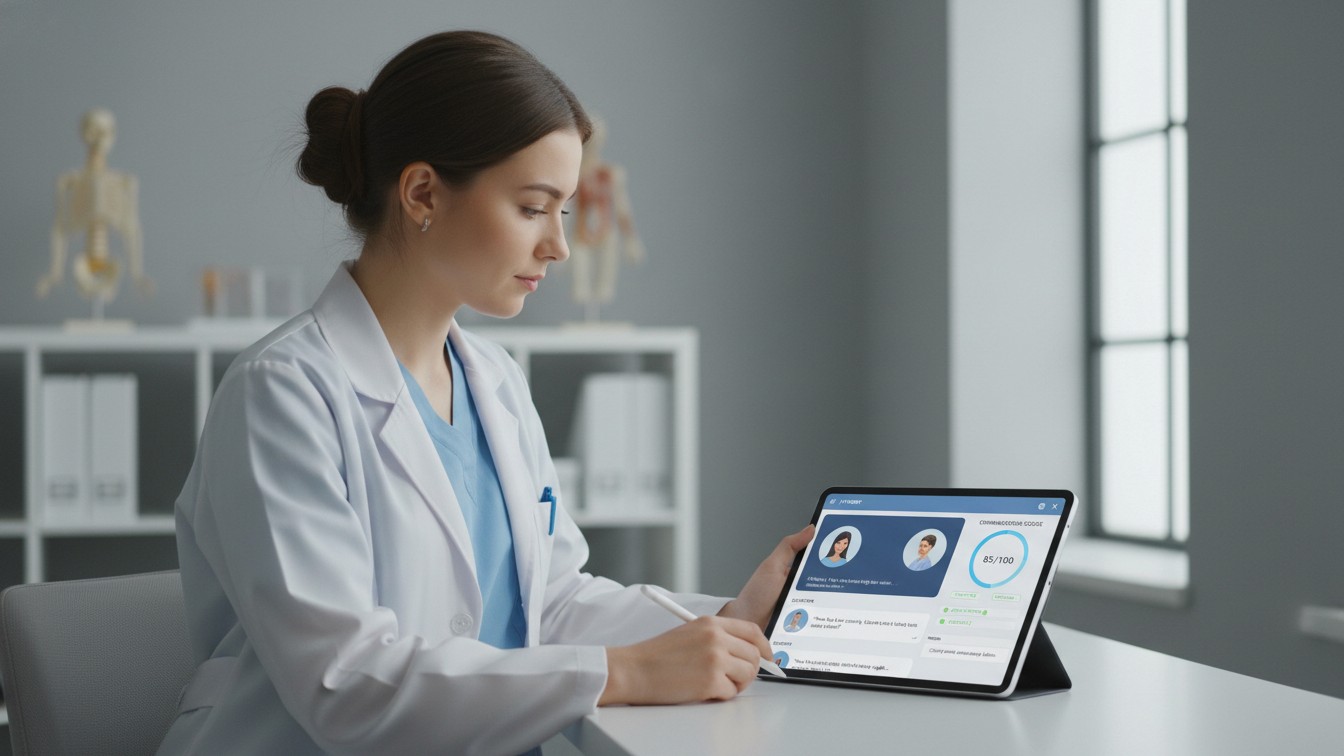
Realistic, voice-based patient simulations that help clinicians practice medical interviews, build communication skills, and receive detailed performance feedback.
Outcome

Improve clinical communication, diagnostic interviewing, and bedside rapport through safe, repeatable AI-patient
simulations.

Top 3 Pains Solved

Clinicians don’t get enough real-world practice with diverse patient scenarios.

Clinicians don’t get enough real-world practice with diverse patient scenarios.

Existing simulations lack realism, emotional nuance, and real-time feedback.

Existing simulations lack realism, emotional nuance, and real-time feedback.

Training programs struggle to measure communication quality and track progress over time.

Training programs struggle to measure communication quality and track progress over time.

Core Features

Core Features

Realistic AI-Patient Conversations (Voice-Based)

Train with lifelike patient interactions—complete with natural emotion, variability, and human-like conversation flow.

Custom Scenario Builder

Select patient demographics, visit type, symptom severity, and medical history to train for the exact cases you need.

Clinical Skills Assessment

Receive structured scoring on history taking, questioning technique, patient safety considerations, and follow-up planning.

Communication Performance Analysis

Get detailed feedback on empathy, tone, active listening, clarity, and professionalism—highlighting strengths and areas for growth.

Scenario Replays & Conversation Highlights

Review transcripts, pinpoint communication breakdowns, and compare performance across training sessions.

Educator & Program Dashboards

Track learner progress, identify skill gaps, and build targeted training curriculums at scale.

Impact

Impact

Improves clinician communication scores and bedside manner consistency across diverse patient profiles.

Improves clinician communication scores and bedside manner consistency across diverse patient profiles.

Improves clinician communication scores and bedside manner consistency across diverse patient profiles.

Reduces errors in early-stage history taking by reinforcing structured interviewing habits.

Reduces errors in early-stage history taking by reinforcing structured interviewing habits.

Reduces errors in early-stage history taking by reinforcing structured interviewing habits.

Builds clinician confidence by allowing unlimited practice in a low-stakes environment.

Builds clinician confidence by allowing unlimited practice in a low-stakes environment.

Builds clinician confidence by allowing unlimited practice in a low-stakes environment.

Helps training programs measure, standardize, and elevate communication quality across cohorts.

Helps training programs measure, standardize, and elevate communication quality across cohorts.

Helps training programs measure, standardize, and elevate communication quality across cohorts.

Testimonials

Testimonials

This is the closest thing to a real patient encounter I’ve ever practiced with. The tone analysis helped me fix blind spots I didn’t know I had.”

— Internal Medicine Resident

This is the closest thing to a real patient encounter I’ve ever practiced with. The tone analysis helped me fix blind spots I didn’t know I had.”

— Internal Medicine Resident

“Our students finally understand what effective history taking sounds like. The feedback engine has become a core part of our curriculum.”

— Nursing Program Director

“Our students finally understand what effective history taking sounds like. The feedback engine has become a core part of our curriculum.”

— Nursing Program Director

“The AI patients react like real people. It forces you to slow down, listen, and respond appropriately.”

— Family Medicine Physician

“The AI patients react like real people. It forces you to slow down, listen, and respond appropriately.”

— Family Medicine Physician

Industries

Medical Schools Nursing Schools Residency Programs Hospitals & Health Systems Clinician Continuing Education Telemedicine Teams Urgent Care Training Simulation Centers

  • Use Cases Points

  • Use Cases Points

Frequenly asked questions

Frequenly asked questions

Frequenly asked questions

What is an AI-powered clinical training platform?

It’s a simulation system that lets clinicians practice real-time patient interactions using voice-based AI models that mimic real patient emotions, conditions, and communication styles.

How accurate are the performance assessments?

The platform evaluates communication and clinical interviewing skills using structured scoring criteria validated by medical educators, providing specific, actionable feedback after each session.

Can educators customize training scenarios?

Yes. Programs can tailor patient demographics, visit types, medical histories, and symptom severity to match their curriculum or specialty needs.

Is this suitable for medical and nursing students?

Absolutely. Students use it to build foundational interviewing skills before entering clinical rotations, reducing anxiety and improving real-world performance.

Does it support voice interactions instead of text?

Yes. The platform uses natural, conversational voice exchanges to mirror real clinical encounters more closely than text-only simulations.

What is an AI-powered clinical training platform?

It’s a simulation system that lets clinicians practice real-time patient interactions using voice-based AI models that mimic real patient emotions, conditions, and communication styles.

How accurate are the performance assessments?

The platform evaluates communication and clinical interviewing skills using structured scoring criteria validated by medical educators, providing specific, actionable feedback after each session.

Can educators customize training scenarios?

Yes. Programs can tailor patient demographics, visit types, medical histories, and symptom severity to match their curriculum or specialty needs.

Is this suitable for medical and nursing students?

Absolutely. Students use it to build foundational interviewing skills before entering clinical rotations, reducing anxiety and improving real-world performance.

Does it support voice interactions instead of text?

Yes. The platform uses natural, conversational voice exchanges to mirror real clinical encounters more closely than text-only simulations.

Comparison

Comparison 1

  • Content

Comparison 2

  • Content

Comparison